Over the past decade, security has undergone a fundamental transformation. Not because of a single technology breakthrough, but because the world around us has changed.
Organizations today face a growing range of interconnected challenges: geopolitical uncertainty, evolving cyber threats, risks to critical infrastructure, regulatory pressures, and increasing expectations around operational resilience and business continuity. As a result, security is no longer confined to the perimeter of an organization. It has moved to the boardroom.
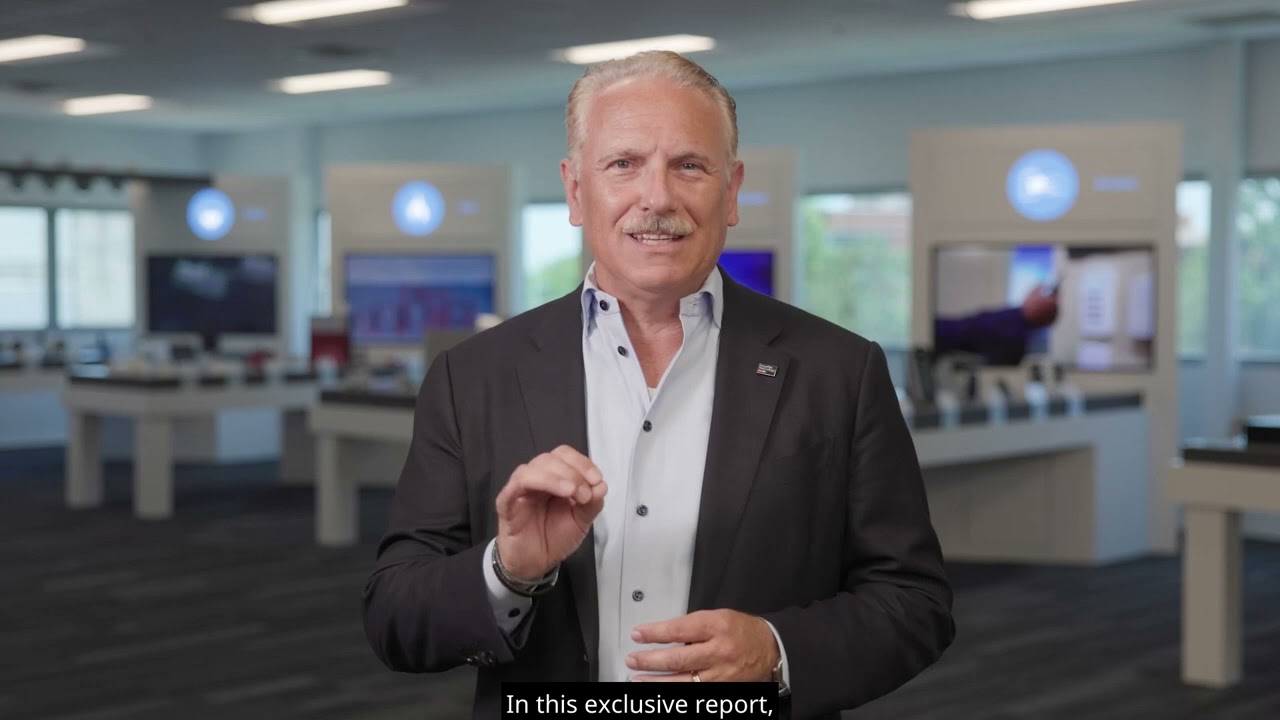
To mark the release of the 2027 Global Technology Outlook Report, we sat down with Tony Byerly, Global President and CEO, Securitas Technology, to explore the innovations that have transformed security, how they laid the foundation for today’s emerging technologies, and what they can tell us about where the security industry is heading.
Tony, how has the role of security changed over the past decade?
“Today, security plays a far broader role than simply protecting people, property, and assets. It has become a strategic capability that helps organizations manage risk, strengthen resiliency, support operational performance, and build trust with employees, clients, and communities.
For me, that shift is one of the most significant changes I’ve seen in my career in the security industry. A decade ago, many security discussions focused on individual systems and technologies. Today, business leaders are asking very different questions: How do we protect critical operations? How do we maintain continuity during disruption? How do we anticipate emerging risks? How do we create secure environments that enable growth? And where should our investments go?
Those are not just security questions. They’re business questions.”
What role has technology played in this transformation?
“Technology has undoubtedly played a major role in driving this transformation. Greater connectivity, interoperability of systems, and improved integration capabilities have paved the way for artificial intelligence (AI), cloud platforms, and drones and robotics to reshape what’s possible. Together, these technologies offer organizations greater visibility, faster insights, and more effective ways to respond to evolving risks.
But technology is not the story. The real story is what technology enables.
The organizations that are most successful are the ones using technology to improve decision-making, strengthen resilience, and empower people. They understand that innovation delivers the greatest value when it’s clearly connected to a business outcome.”
AI is a major theme in the 2027 Global Technology Outlook Report. How do you see its impact on security?
“As artificial intelligence continues to move from experimentation to adoption, security leaders are starting to see its potential to help them identify patterns, prioritize risks, make faster decisions, and create a more proactive approach to security. It’s also the top product development priority for our strategic tech partners, all of whom are actively embedding AI into their products and solutions. At the same time, the growth of AI reinforces the importance of transparency, governance, and trust.
But AI is just one example of how clients are carefully adopting new innovations. I think we’ll see the same measured approach with drones and robotics, which are already becoming a bigger part of the industry conversation and potential solutions to certain industry challenges.
Looking ahead, I don’t believe the organizations that succeed will necessarily be those with the most technology. It will be those that combine technology with expertise, sound judgment, and a clear understanding of risk. It’s the businesses that see the full potential of this new connected ecosystem.”
You’ve mentioned a connected ecosystem as a defining trend. What does that mean in practice?
“The new connected ecosystem is redefining how businesses approach risk management. Systems and technology are becoming increasingly interconnected, and organizations can no longer manage them in isolation. This interconnectedness also creates new risks as we look to protect the new ecosystem from emerging threats.
Resilience requires a holistic approach that brings together people, data, technology, and intelligence. That evolution aligns very closely with how we see the future of security.”
Looking ahead to 2030, how do you expect the role of security leaders to evolve?
“I expect the role of security to continue to expand. It will become more predictive, more intelligence-led, and more closely connected to business strategy, making it a key part of a business’ investments. Security leaders will increasingly be part of conversations about growth, operational excellence, continuity, and long-term organizational resilience.
In other words, security will continue its journey from a protective function to a strategic enabler.”
Where does Securitas fit into this future, and what will remain constant?
“At Securitas, we believe the future of security lies in the combination of technology, intelligence, and human expertise. While technologies will continue to evolve, one thing will remain constant: people will remain at the center of creating safer, more secure environments.
The next decade will undoubtedly bring new challenges and new opportunities. But organizations that treat security as a strategic capability rather than a standalone function will be better positioned to navigate uncertainty, build resilience, and create long-term value.
That’s why security has moved from the perimeter to the boardroom. And that is why its importance will only continue to grow in the years ahead as a business enabler.”
Finally, how should security leaders use the 2027 Global Technology Outlook Report?
“The report is designed to help security leaders make sense of the ever-changing security technology landscape. It brings together independent market research, perspectives from the industry’s leading technologists and innovators, insights from global subject matter experts, and findings from the world’s largest global security end-user client survey, with over 16,000 respondents from 19 countries.
As a trusted advisor to our clients, we bring these insights together so organizations can benchmark where they are today, proactively plan their security roadmaps, and make the best investment decisions for their security program.
My advice is to use the report as a starting point for strategic conversations: between security leaders and the broader business, between physical and cyber teams, and between internal stakeholders and trusted partners. The goal is not just to understand the technology trends, but to connect them to your risks, your operations, and your long-term objectives.”
Read the 2027 Global Technology Outlook Report
Explore the most comprehensive outlook on the technologies and trends shaping the future of the commercial electronic security industry. Developed by Securitas Technology, the 2027 Global Technology Outlook Report provides valuable insights for security leaders planning for tomorrow's challenges.